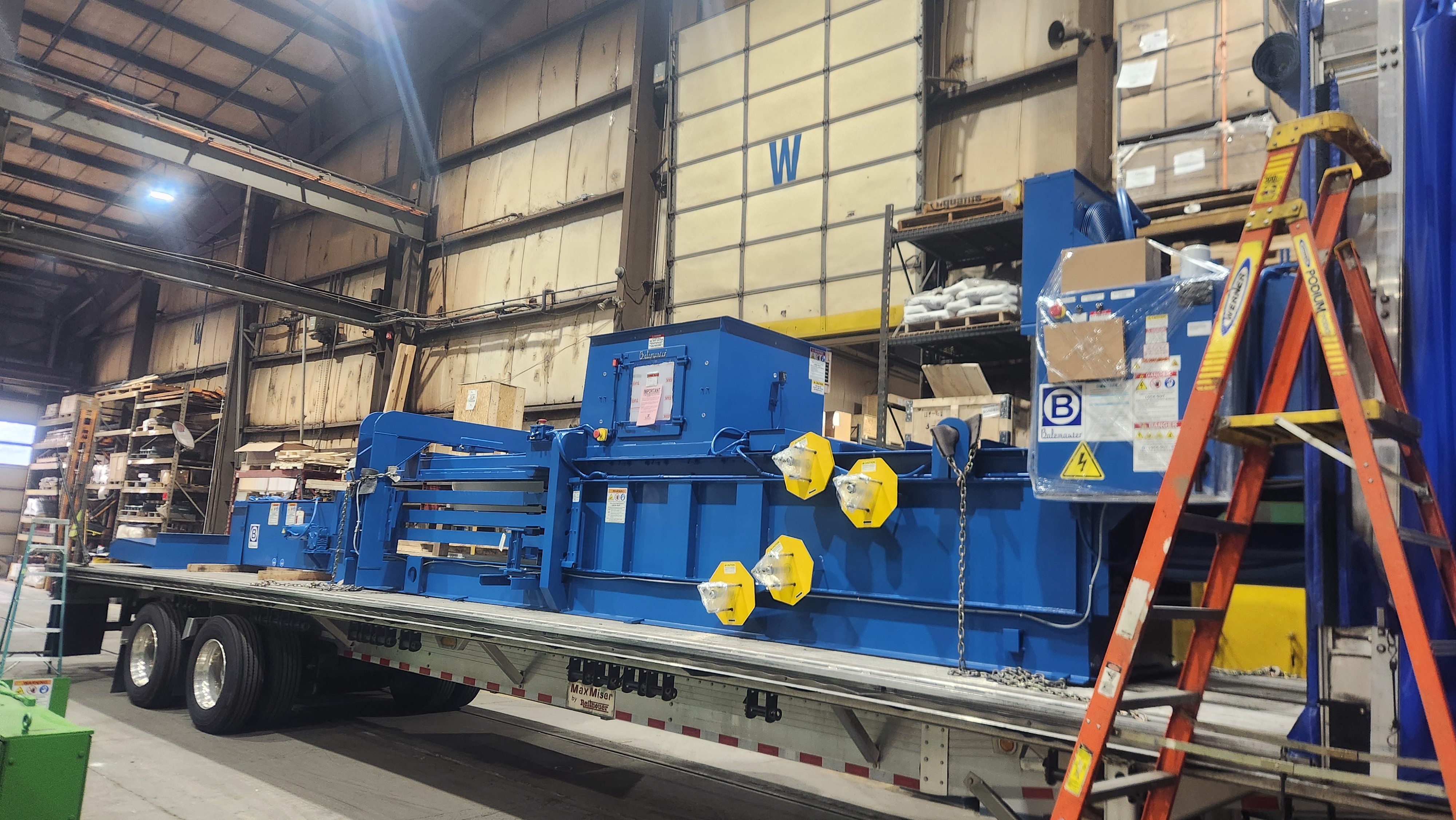
As recycling operations continue to evolve, one thing has become clear: efficiency is no longer optional. Rising labor costs, stricter mill requirements, and higher transportation expenses are forcing facilities to take a closer look at how material is processed, tied, and shipped.
This is where auto-tie balers, particularly horizontal balers, play a critical role in producing mill-ready bales that meet buyer expectations and maximize revenue.
Auto-Tie Balers: More Than Just a Baling Press
An auto-tie baler is not simply a machine that compresses material. It is a fully automated baling system designed to manage the entire baling process—from infeed to finished, mill-ready bales.
Unlike manual tie systems, auto-tie balers automatically insert, twist, and cut baling wire in under 30 seconds, significantly reducing labor while improving consistency and safety .
For high-volume applications, horizontal balers with auto-tie systems allow facilities to process material continuously without stopping for manual tying, which improves throughput and operator efficiency.
Labor Savings That Auto-Tie Balers Deliver
Manual tying is one of the most labor-intensive and injury-prone steps in the baling process. Auto-tie balers eliminate this bottleneck entirely.
Benefits include:
- Reduced labor per bale
- Faster cycle times
- Consistent wire placement and knot integrity
- Improved operator safety
Instead of paying excessive labor costs or dealing with inconsistent bale quality, facilities can produce uniform, mill-ready bales that are easier to handle, stack, transport, and sell .
Horizontal Balers and Consistent Mill-Ready Bale Quality
Mills don’t just want a bale — they want consistent bale size, density, and weight.
Auto-tie horizontal balers are designed to produce uniform bale lengths and densities, which directly improves:
- Bale stackability
- Trailer utilization
- Load stability during transport
- Mill acceptance rates
Consistent bale quality helps facilities reach 40,000+ lb average trailer weights, reducing the risk of light-load chargebacks and improving overall rebate value.
This is one of the most overlooked advantages of upgrading from vertical or manual-tie equipment to a properly sized horizontal auto-tie baler.
Intelligent Controls Reduce Downtime and Improve Output
Modern auto-tie horizontal balers utilize PLC-controlled systems with touchscreen interfaces, providing real-time operational data and diagnostics.
These systems track:
- Bale counts and production totals
- Pump hours and baler runtime
- Maintenance intervals
- Auto-tie system performance
Clear error and status messages allow operators and maintenance teams to address issues early, minimizing downtime and keeping mill-ready bale production consistent .
Cleaner Operation and Better Dust Control
Dust control is an increasing concern for recycling facilities.
Auto-tie balers incorporate advanced design features to keep dust contained, including:
- Encapsulated baler frames
- Ram wiper blades
- Controlled ram stroke programming
- Sealed feed chute doors
These features help maintain a cleaner plant environment while protecting critical baler components and improving long-term reliability .
Designed for Long-Term Reliability in High-Volume Operations
Auto-tie systems rely on electrical and mechanical tying components, avoiding many timing and contamination issues common with hydraulic tier systems.
Heavy-duty twister hooks, electric motors with braking systems, and onboard wire coil holders are built for continuous, high-volume horizontal baler operation with minimal adjustment or downtime .
The BRT Advantage: Equipment + Training = True Mill-Ready Results
At Black River Trading, we know that buying an auto-tie baler or horizontal baler alone doesn’t guarantee mill-ready bales.
True results come from combining:
- The correct baler for the material
- Proper bale size and density setup
- Operator training and certification
- Bale stacking and trailer loading education
That’s why BRT provides customized baler operator training, tailored to each customer’s material stream, baler model, and facility layout.
When equipment and training work together, facilities experience:
- Fewer mill chargebacks
- Higher trailer weights
- Better rebates
- Improved safety and uptime
Final Thoughts: Auto-Tie Balers Are an Investment in Profitability
Auto-tie balers—especially properly sized horizontal balers—are not just about speed. They are about producing consistent, mill-ready bales that meet buyer expectations and maximize every load shipped.
As mills continue to raise standards and transportation costs climb, the right baler paired with proper training can be the difference between ongoing penalties and long-term profitability.
If you’re questioning whether your current baler is capable of producing true mill-ready bales, Black River Trading is here to help guide that conversation.