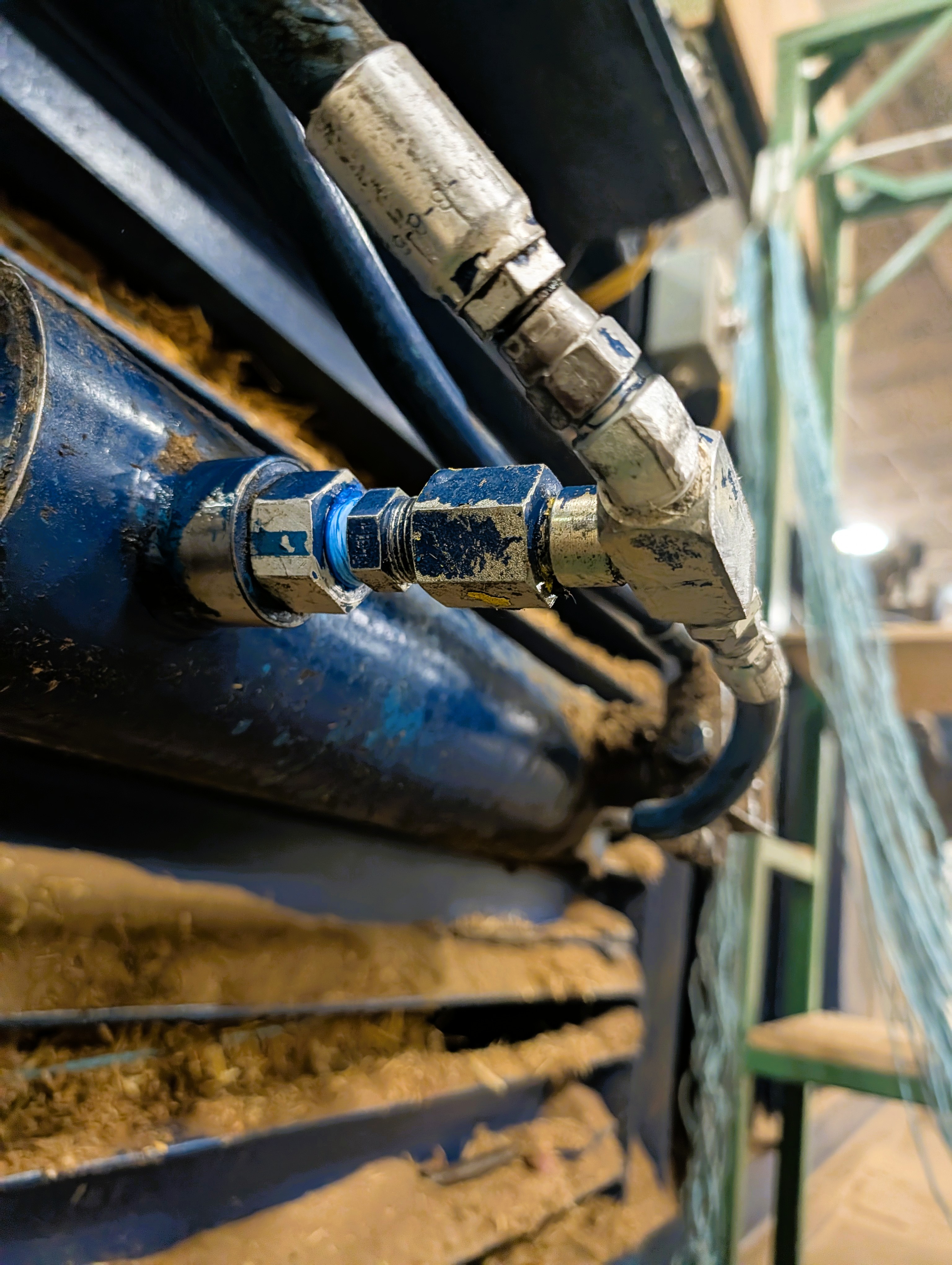
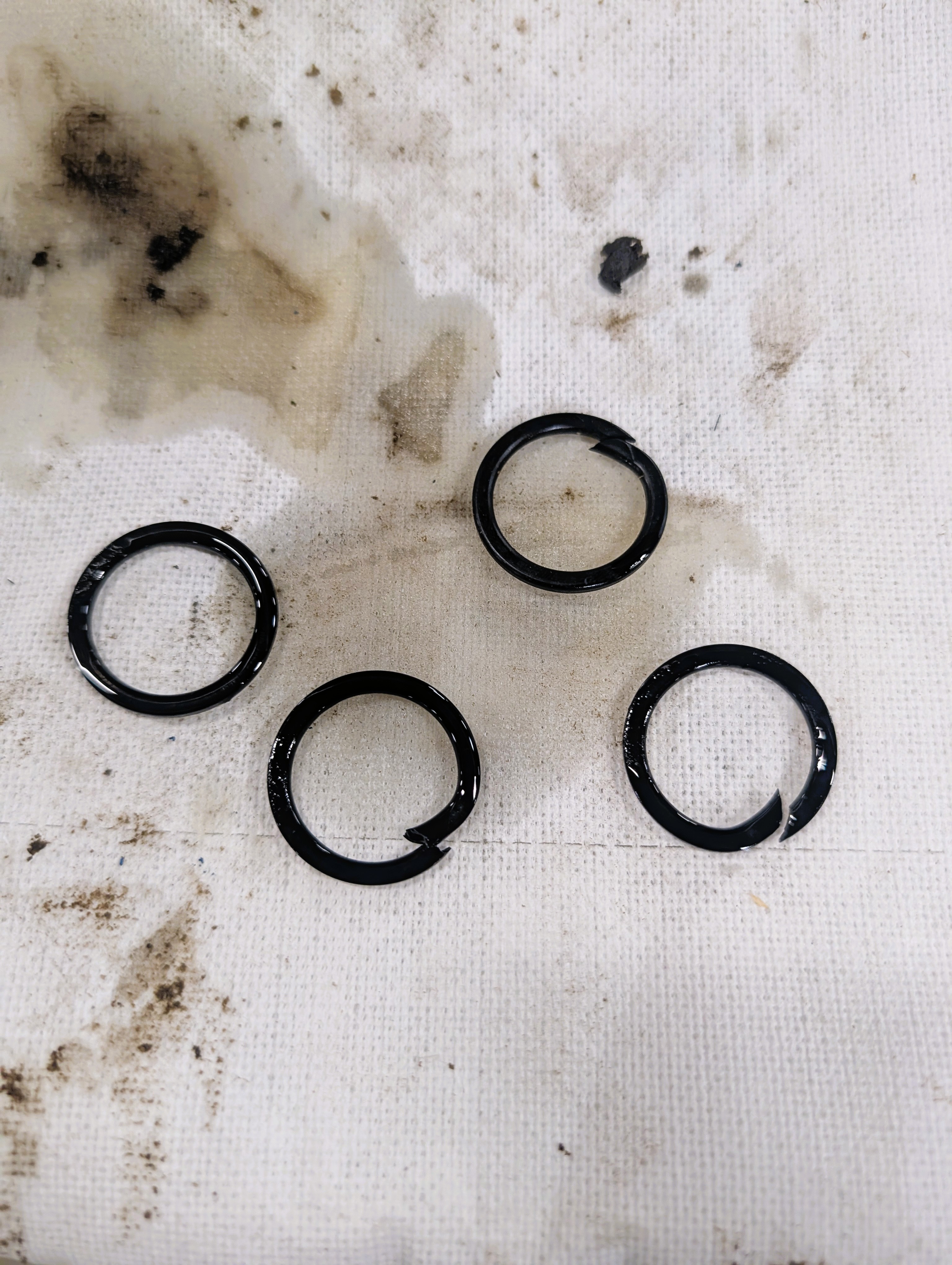
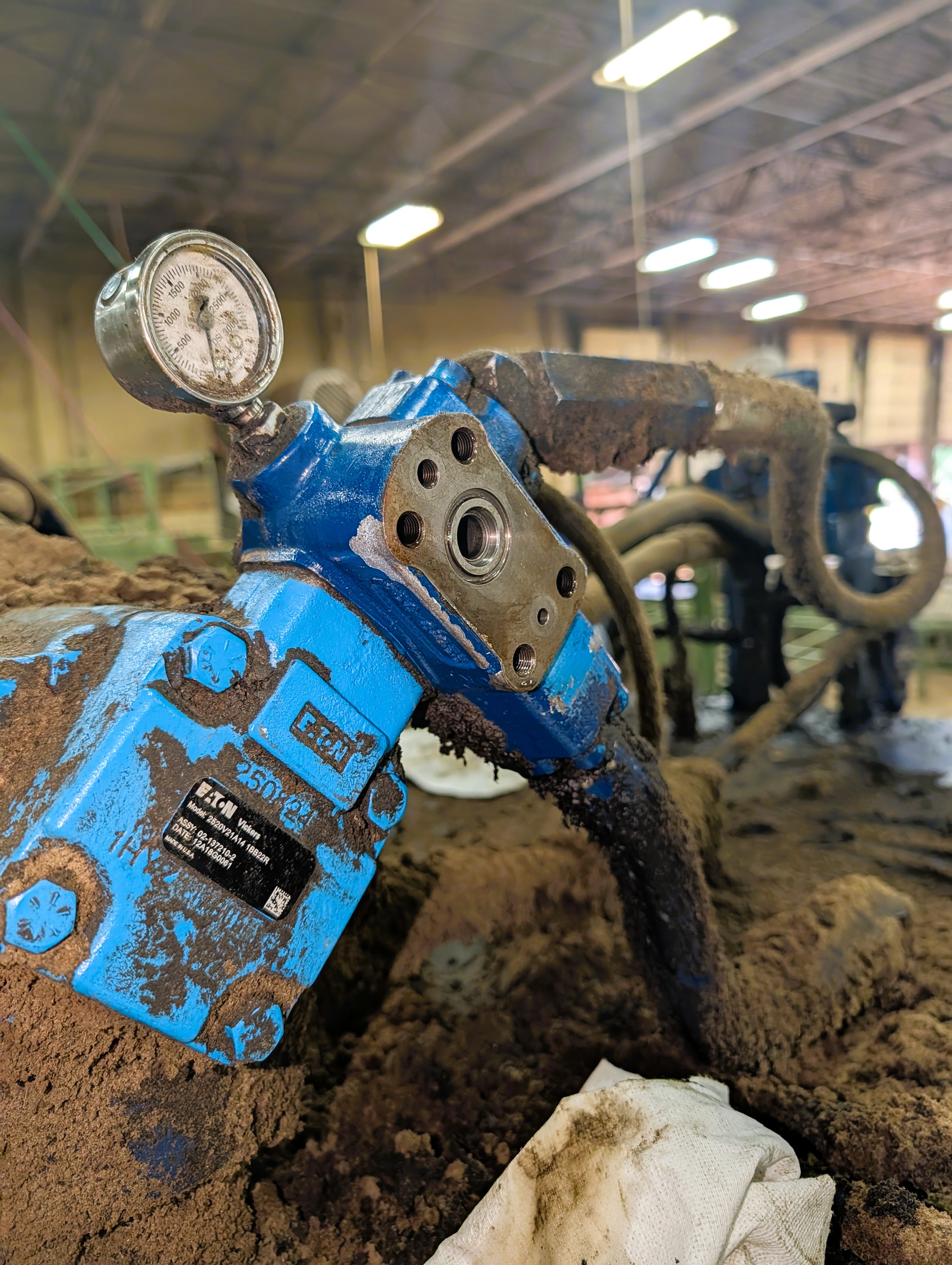
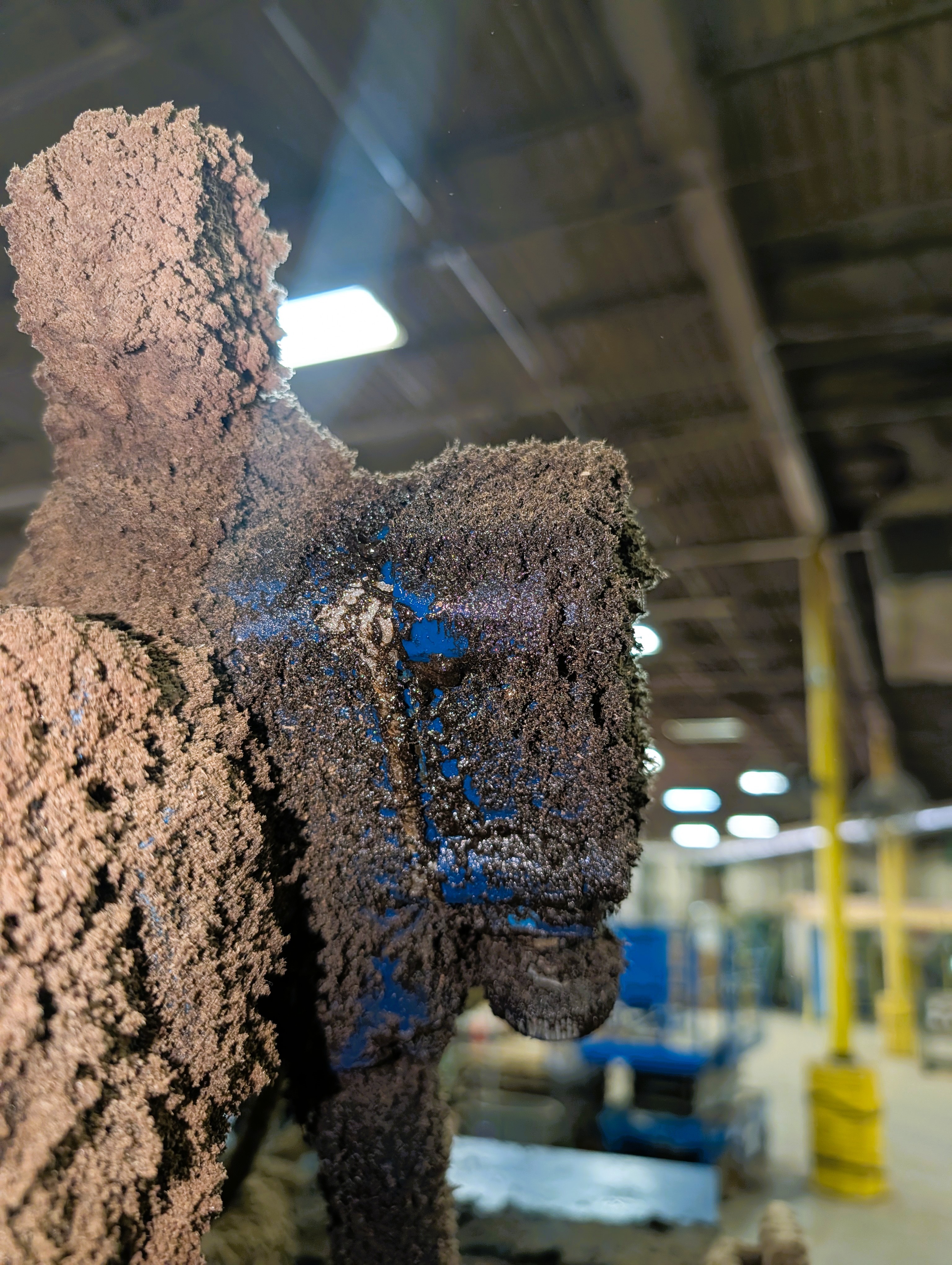
A hydraulic leak doesn’t always mean an older baler needs to be replaced.
But it shouldn’t be ignored, either.
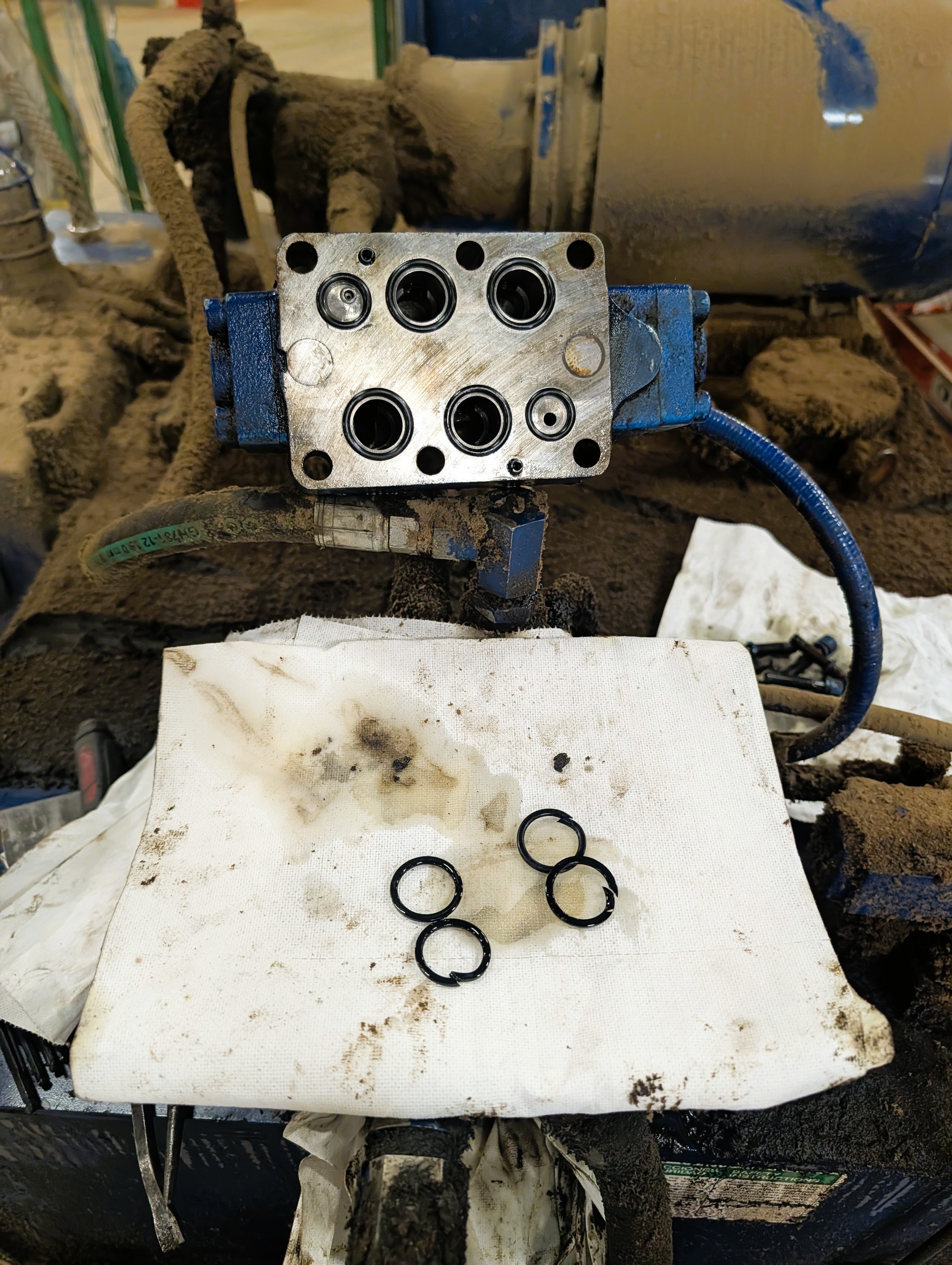
One of our Black River Trading crews recently completed hydraulic repairs on an older closed-door horizontal baler that had developed multiple hydraulic leaks.
Our technicians identified the problem areas, made the necessary repairs, cleaned the affected areas, and tested the equipment before returning it to operation.
The baler is back up and running well, and the customer was able to continue getting value from equipment they already own.
“We Just Keep Adding Oil.”
We hear variations of this more often than you might think.
An older baler develops a small leak.
Someone puts a pan underneath it.
The oil level gets checked more frequently.
Maintenance adds hydraulic oil as needed.
Eventually, the leak becomes part of operating the machine.
That’s not a repair. That’s a workaround.
Hydraulic oil on and around industrial equipment also creates additional concerns involving housekeeping, operating costs, environmental exposure, and potential slip hazards.
More importantly, visible oil may be telling you that something needs attention.
Find the Source, Then Make the Repair
Hydraulic systems on industrial balers operate under significant pressure.
The objective shouldn’t simply be cleaning up the oil.
The objective is determining where it’s coming from and why.
Depending on the equipment, leaks can develop around hoses, fittings, seals, cylinders, valves, manifolds, pumps, and other hydraulic components.
That’s where having technicians familiar with industrial recycling equipment matters.
For this customer, our BRT crew addressed the hydraulic leaks and returned the closed-door baler to service.
Older Doesn’t Automatically Mean Replace It
We sell new balers.
We rebuild used balers.
And we repair older equipment every day.
Those three things aren’t contradictory.
Sometimes an older closed-door baler still has plenty of useful life remaining, and a targeted repair is the best investment.
Other times, our technicians begin seeing a different picture:
Repeated hydraulic failures.
Increasing structural wear.
Obsolete electrical controls.
Major cylinder problems.
Difficulty sourcing parts.
Increasing repair costs.
Declining reliability.
That’s when it may be time to compare the cost of continued repairs against a professionally rebuilt or new baler.
We’d rather have that conversation based on the actual condition of the equipment than automatically tell every customer they need another machine.
BRT Supports the Entire Equipment Lifecycle
Black River Trading provides support for industrial recycling equipment throughout its lifecycle.
That includes:
- Hydraulic leak repair
- Hydraulic cylinder repair and replacement
- Hydraulic pump and motor replacement
- Electrical troubleshooting
- Structural repairs
- Preventive maintenance
- Baler inspections
- Parts
- Reconditioning and rebuilding
- New equipment
- Installation and startup
- Operator and maintenance training
We service closed-door balers, full-eject balers, auto-tie balers, two-ram balers, vertical balers, industrial shredders, conveyors, and other recycling equipment.
Repair It, Rebuild It, or Replace It?
That’s ultimately the question.
And there isn’t one answer for every machine.
Repair it when the equipment remains a good fit and the repair makes financial sense.
Rebuild it when the basic machine is right, but its condition requires a more comprehensive investment.
Replace it when continuing to put money into aging or inadequate equipment no longer provides the best return.
BRT can help with all three.
For this customer, repairing the existing closed-door baler made sense.
Our crew got the job done, the hydraulic leaks were addressed, and the baler is back to work.
That’s a good result.
If your baler has started leaving hydraulic oil on the floor, don’t make adding oil part of your normal operating procedure.
📞 Contact Black River Trading and let an experienced recycling equipment technician take a look.
Value. Integrity. Partnership. Exceptional Support.