Some of the most important parts of an industrial baler are also the parts customers rarely see.
The hydraulic reservoir is a perfect example.
You can repaint a machine.
You can repair a hydraulic leak.
You can replace filters.
You can make the outside look great.
But when Black River Trading rebuilds an industrial baler, we want to understand what’s happening inside the machine, too.
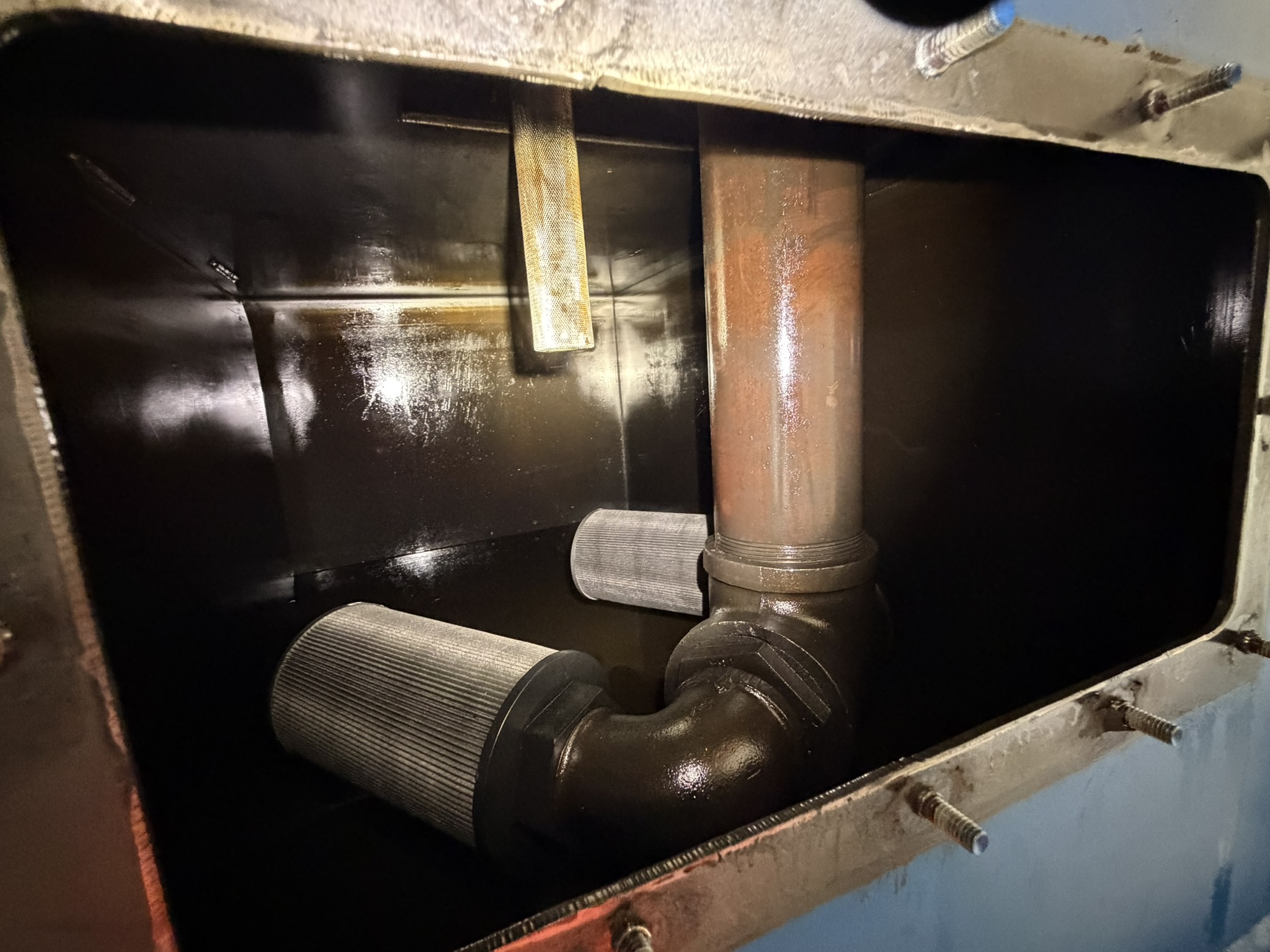
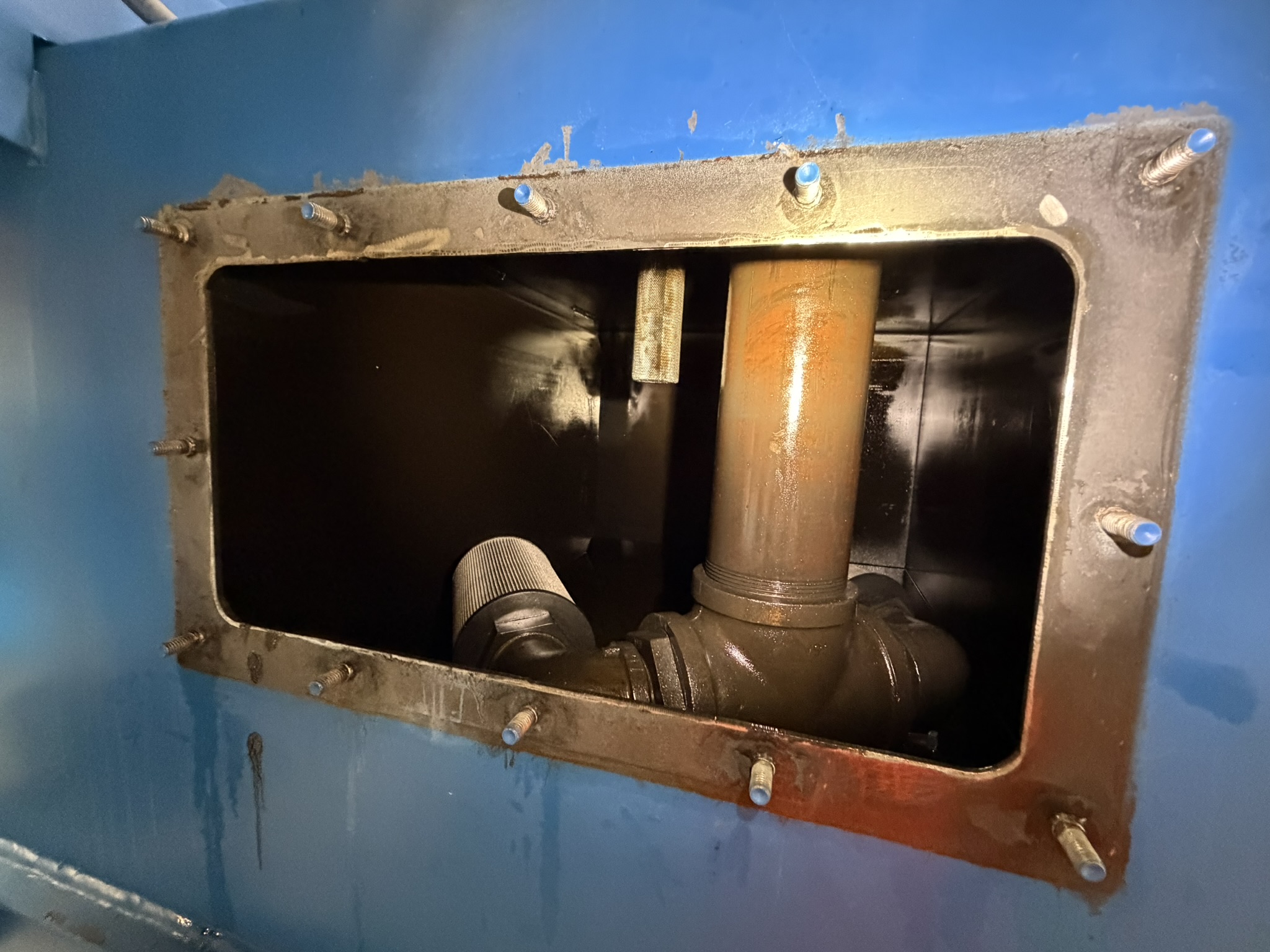
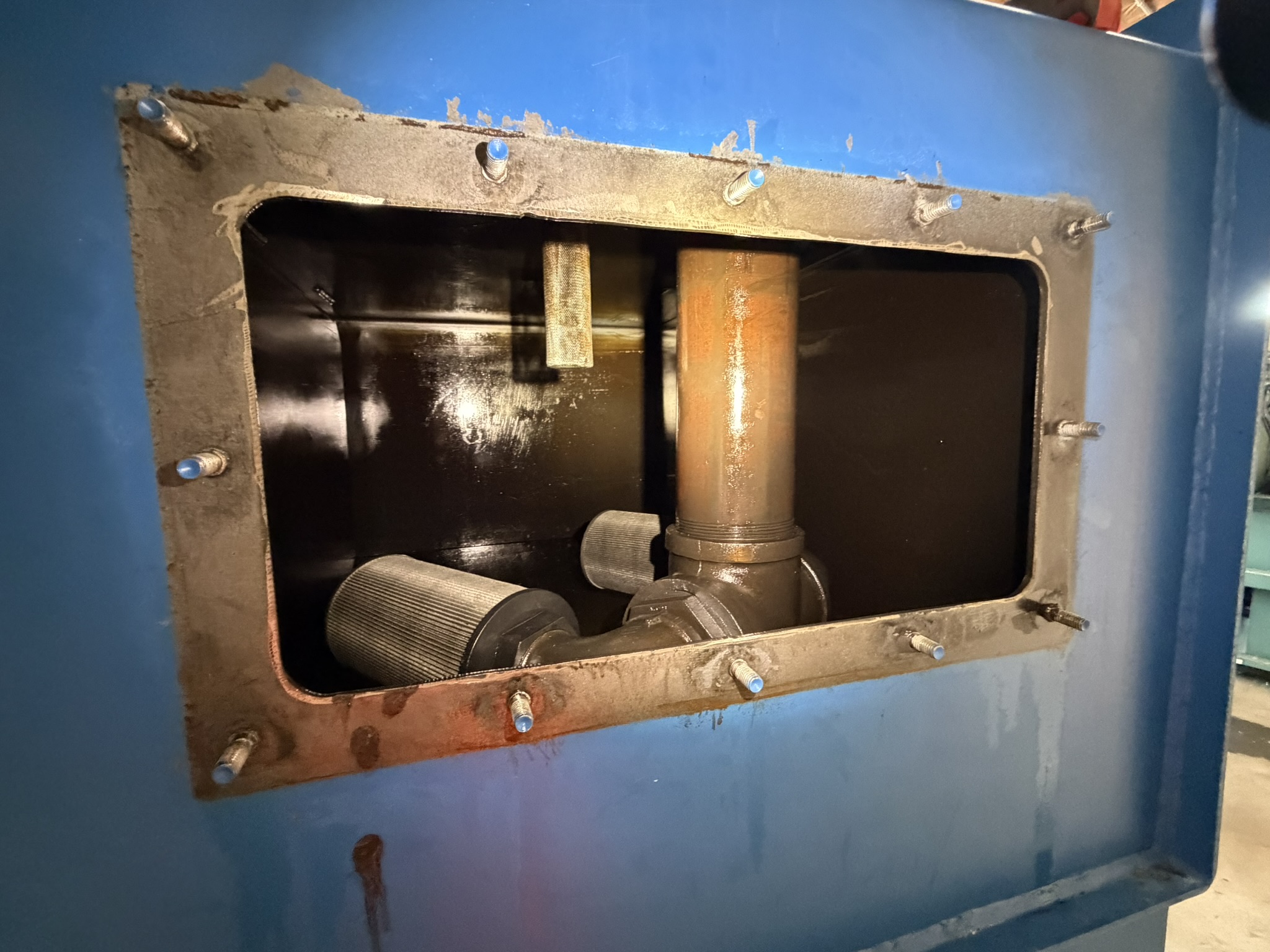
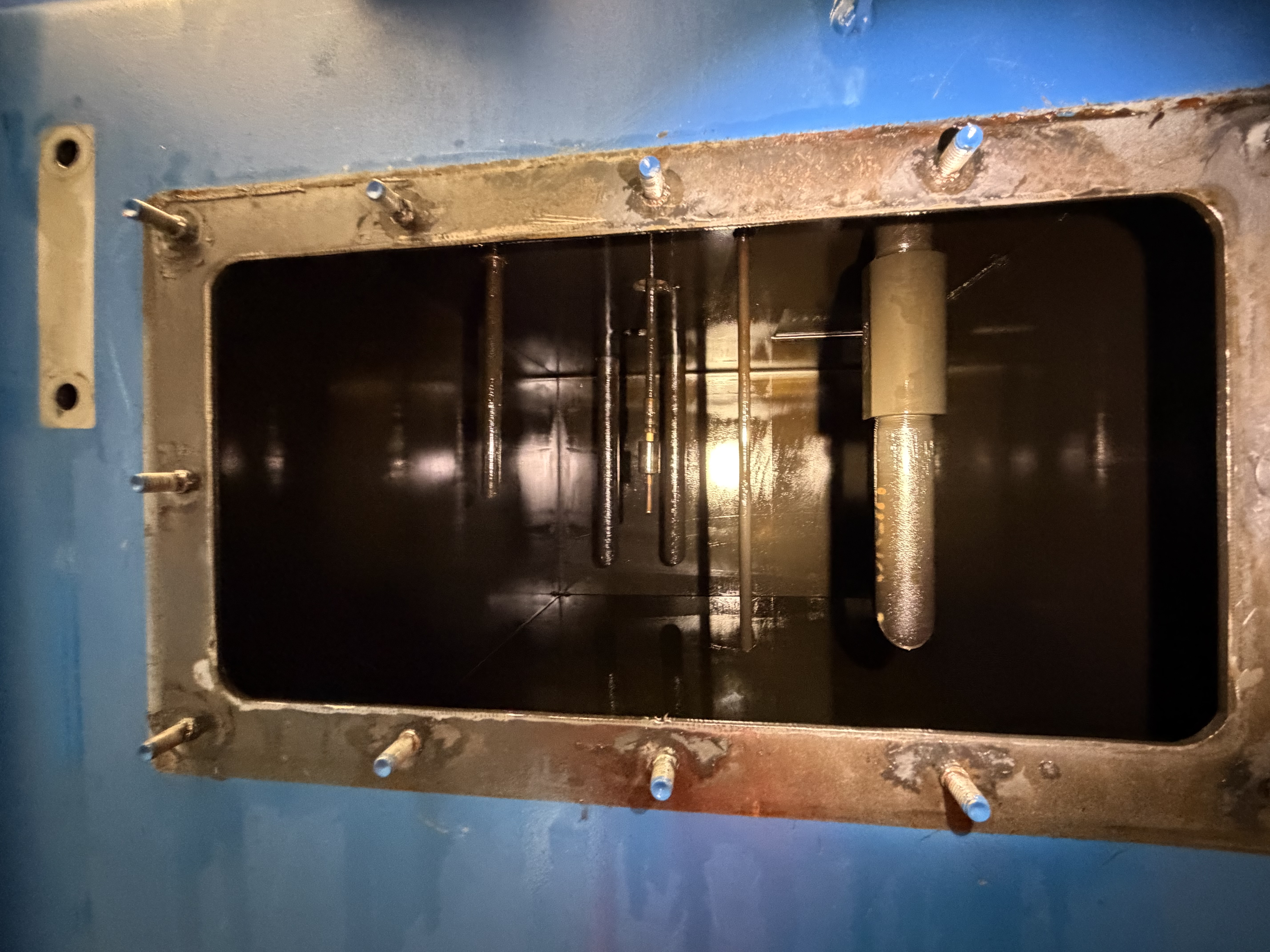
We’re currently rebuilding a Balemaster auto-tie baler, and part of that process means getting inside the hydraulic reservoir.
Not simply draining the oil.
Getting inside it.
We Don’t Just Drain the Hydraulic Tank
On this Balemaster rebuild, the hydraulic system is receiving significant attention.
The work includes:
- Draining the existing hydraulic oil
- Squeegeeing the hydraulic reservoir
- Hand-wiping the inside of the tank
- Thoroughly inspecting the internal reservoir
- Installing new hydraulic oil
- Installing new bulkhead seals
- Installing new strainer filters
- Installing a new strainer inlet
There’s an important reason we physically clean the reservoir instead of simply draining the old oil and refilling it.
We want to see what’s inside.
Hydraulic Oil Can Tell a Story
The condition of hydraulic oil can tell an experienced technician a lot about how equipment has been maintained.
Is the oil clean?
Is there sludge?
Is there contamination?
Is there material sitting at the bottom of the reservoir?
Are there metallic particles or other signs that deserve further investigation?
How long has the oil been in service?
Has filtration been maintained properly?
These aren’t questions you can always answer by looking through a sight gauge.
Sometimes, you need to open the machine and look.
Why Hand-Clean the Reservoir?
Draining hydraulic oil doesn’t necessarily remove everything that has accumulated inside a reservoir.
Contamination can settle.
Debris can remain on the bottom.
Material can collect in areas that aren’t visible externally.
That’s why our rebuild process on this machine includes squeegeeing and physically hand-wiping the reservoir clean.
Yes, we want it clean before adding new hydraulic oil.
But there’s another reason.
A clean reservoir allows our technicians to inspect what they’re working with.
When we’re rebuilding equipment that another company will depend on for production, those details matter.
New Oil Doesn’t Fix a Dirty Hydraulic System
Putting fresh hydraulic oil into a contaminated system doesn’t address the underlying contamination.
That’s why the other components matter, too.
For this Balemaster, we’re installing new strainer filters, a new strainer inlet, new bulkhead seals, and new hydraulic oil as part of the work.
The objective is to address the hydraulic system as a system, rather than treating each component independently.
We Don’t Stop Paying Attention After the Rebuild
Hydraulic oil condition matters after the machine goes back into production, too.
That’s why BRT uses hydraulic oil sample analysis as part of our approach to preventive maintenance.
Regular oil samples can provide valuable information about changes occurring inside a hydraulic system.
Instead of simply asking:
“Does the oil look dirty?”
We want data that can help us monitor the condition of the oil and identify changes over time.
That’s especially valuable on large auto-tie balers, two-ram balers, closed-door balers, shredders, and other hydraulic recycling equipment, where pumps, cylinders, valves, and other hydraulic components represent significant investments.
This Is What We Mean by Rebuilding Equipment
There is a difference between making used equipment look better and actually rebuilding it.
A new coat of paint is easy to see.
A hand-cleaned hydraulic reservoir isn’t.
But which one matters more when the machine is running every day?
At Black River Trading, we believe the work customers can’t see can be every bit as important as the work they can.
Structural condition.
Wear surfaces.
Hydraulics.
Electrical systems.
Controls.
Cylinders.
Auto-tie components.
Hydraulic oil.
Testing.
Those details ultimately determine what kind of machine leaves our facility.
And It’s Why the Company Behind Your NEW Baler Matters, Too
There’s another reason we’re showing this work.
Black River Trading is the Authorized Balemaster Distributor for Ohio, Michigan, Kentucky, and Western Pennsylvania.
We sell new Balemaster equipment.
But we also work on it.
Our technicians understand what happens to these machines after years of production because we’re the people maintaining, repairing, inspecting, and rebuilding industrial balers in the field and in our shop.
That experience matters when we’re helping a customer select a new machine.
We’re thinking beyond delivery day.
We’re thinking about application, installation, operation, preventive maintenance, parts, training, and the long-term support of the equipment.
Considering a New Balemaster?
If you’re looking at a new Balemaster auto-tie baler, closed-door baler, shredder, hogger, or specialty recycling system in Ohio, Michigan, Kentucky, or Western Pennsylvania, we’d like the opportunity to earn your business.
Don’t just compare machines.
Compare the people who will be standing behind them.
New Balemaster equipment. Balemaster parts. Installation. Training. Preventive maintenance. Field service. Baling wire. Long-term support.
That’s what we want the BRT and Balemaster partnership to mean for our customers.
📞 Contact Black River Trading about your next Balemaster equipment project.
Value. Integrity. Partnership. Exceptional Support.