Is Your Recycling Department a Profit Center or a Cost Center? Five Ways to Improve Your Bottom Line
Published:
Most manufacturing and distribution facilities generate recyclable materials every day. But how many are truly maximizing the financial value of those materials?
Cardboard.
OCC.
Paper.
Plastic film.
Manufacturing scrap.
Packaging waste.
These materials are often viewed as byproducts of production.
Something that needs to be collected, processed, and removed from the facility.
But what if your recycling operation could do more than simply manage waste?
What if better equipment, improved processes, and smarter material handling could reduce operating expenses while increasing the value of your recyclable commodities?
At Black River Trading, we believe recycling equipment should be evaluated as an investment in operational efficiency and long-term value.
And sometimes, relatively straightforward improvements can create meaningful financial opportunities.
1. Are You Getting the Most Value From Your Recyclable Materials?
Not all recyclable materials have the same value.
And even within the same commodity, quality, contamination, consistency, and preparation can influence what buyers are willing to pay.
Consider OCC and other paper products.
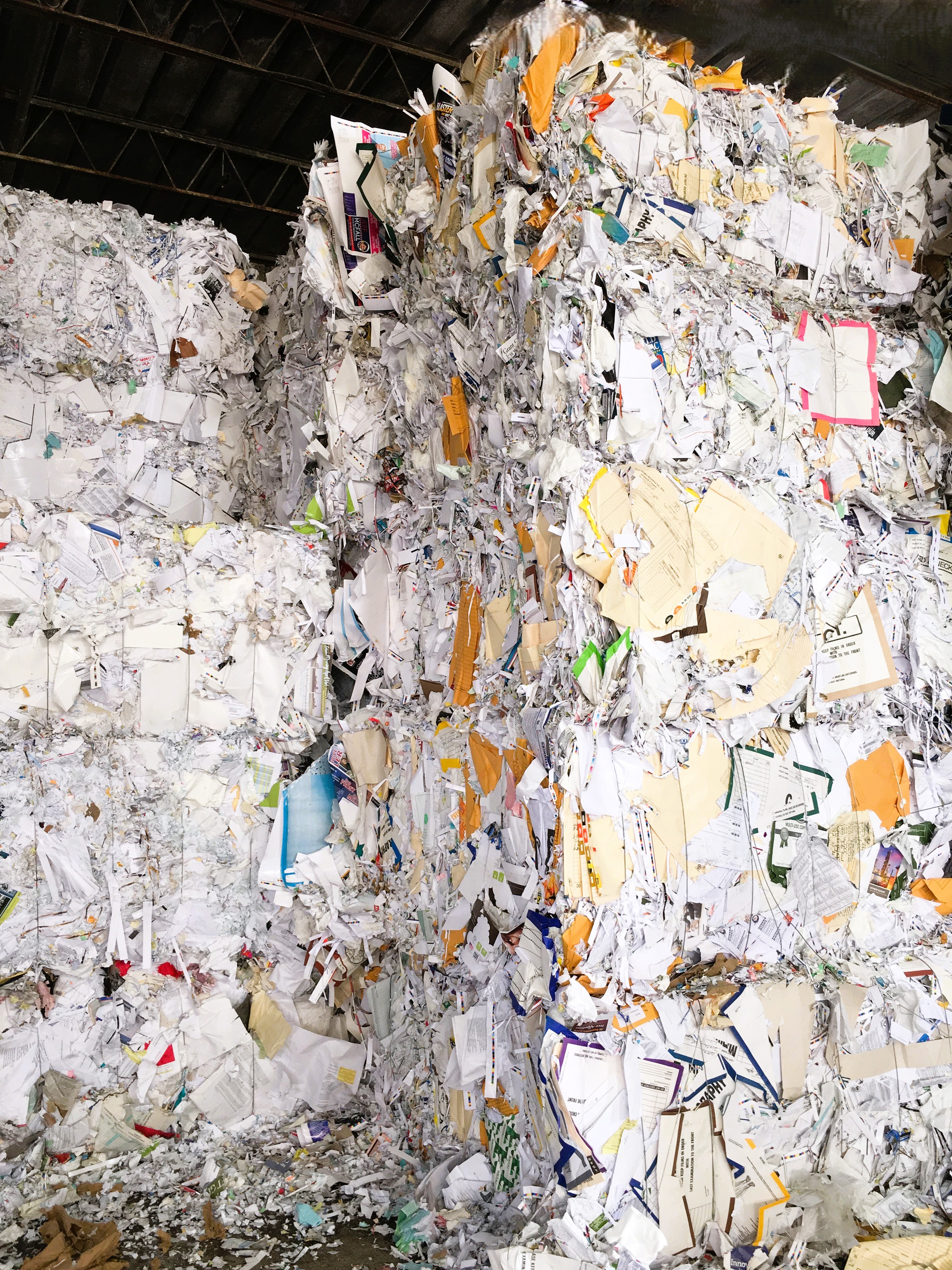
Poorly sorted material may contain contamination.
Inconsistent bale quality can create handling challenges.
Improper material preparation may limit available markets.
The way recyclable material is processed can affect its marketability and overall value.
For manufacturing and distribution facilities, this means recycling operations deserve the same attention given to other production processes.
How BRT Can Help
Black River Trading can help customers evaluate equipment and processes used to prepare recyclable commodities.
Our experience includes industrial balers, shredders, conveyors, material handling, and equipment operation.
We can help identify opportunities to improve material preparation, bale consistency, and processing efficiency.
The goal is to produce a consistent, marketable commodity while controlling the cost of processing it.
2. Are You Shipping Dense Bales or Paying to Transport Air?
Transportation can represent a significant expense in recycling operations.
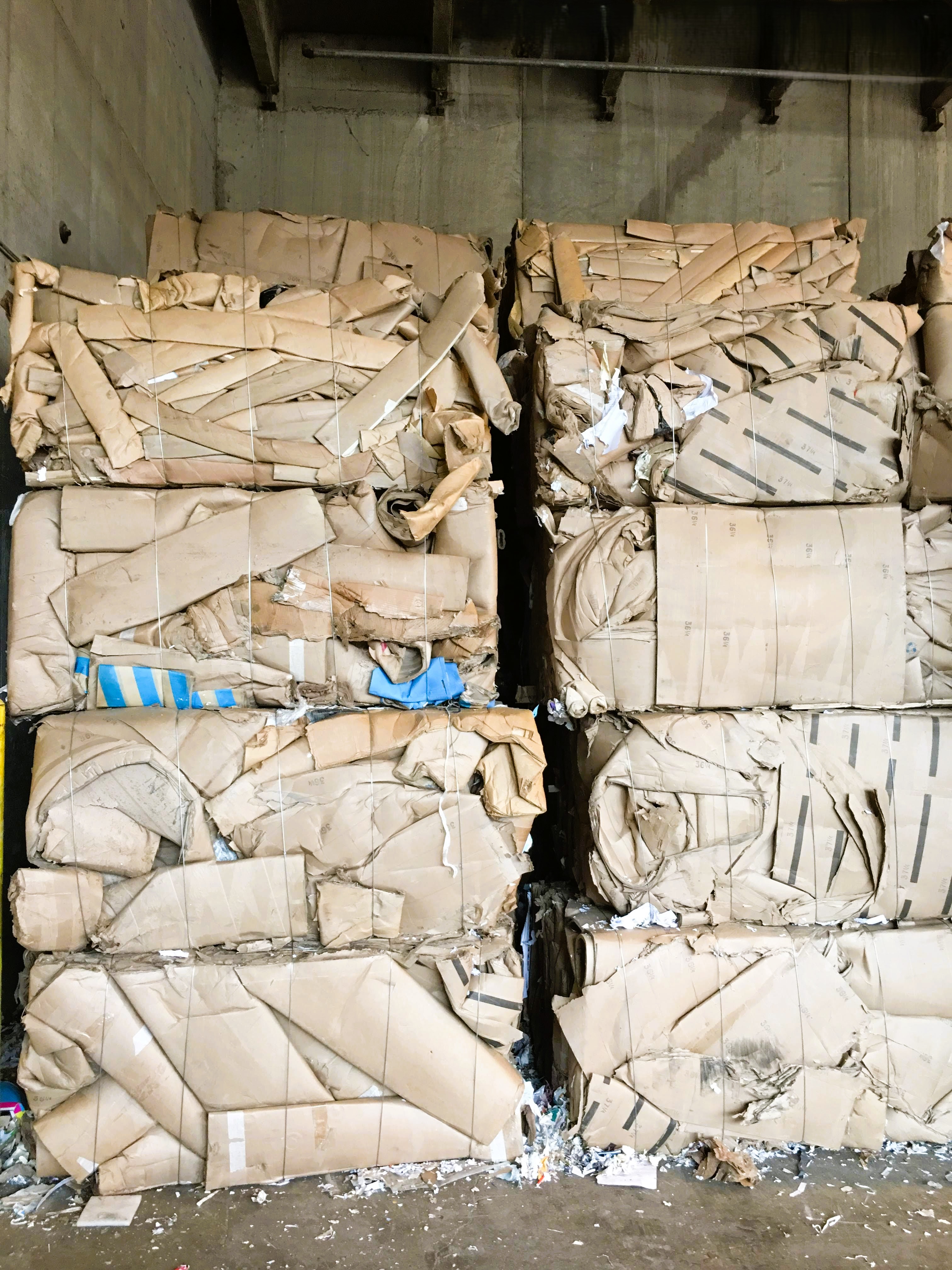
And one of the factors influencing transportation efficiency is bale density.
Imagine two facilities shipping the same recyclable commodity.
Both use similar trailers.
Both have comparable transportation distances.
But one consistently produces heavier, denser bales.
Depending on trailer configuration, material, and legal weight limits, the facility producing denser bales may be able to transport more material per shipment.
That can reduce the number of loads required to move the same amount of material.
Why Bale Quality Matters
Properly formed bales can help improve:
- Transportation efficiency
- Finished-material storage
- Material handling
- Bale consistency
- Shipping preparation
- Downstream processing
The objective isn't simply producing the heaviest possible bale. It's producing bales that meet buyer requirements while supporting safe handling and efficient transportation.
New Balemaster Auto-Tie Balers
For high-volume OCC, paper, corrugated, and other compatible material applications, Balemaster auto-tie balers provide industrial baling solutions designed for continuous production and automatic tying.
Black River Trading is an Authorized Balemaster Distributor serving Ohio, Michigan, Kentucky, and Western Pennsylvania.
We provide new Balemaster equipment, installation, startup, operator training, OEM parts, preventative maintenance, and long-term service support.
For facilities seeking improved production and consistent bale quality, a properly selected new Balemaster may be worth evaluating.
3. How Much Labor Does Your Recycling Operation Really Require?
Labor is another major consideration.
Think about how recyclable material moves through your facility.
Someone collects it.
Someone transports it.
Someone loads it into a baler.
Someone removes the finished bale.
Someone moves the bale into storage.
Someone loads it for shipment.
Now ask yourself:
How many of those steps could be reduced through better equipment or automation?
Not every operation requires a fully automated recycling system.
But many facilities have opportunities to reduce repetitive material handling.
Conveyors and Material-Handling Equipment
Black River Trading works with Titan Conveyors and other material-handling equipment manufacturers to help customers improve material flow.
Depending on the application, solutions may include:
- Infeed conveyors
- Incline conveyors
- Box dumpers
- Automated feeding systems
- Finished-bale handling systems
- Integrated recycling equipment
For example, a finished-bale transfer and accumulation system may allow multiple bales to collect before an operator needs to remove them.
That can reduce the frequency of forklift involvement and allow employees to focus on other responsibilities.
The objective is to make equipment perform more of the repetitive work.
What Could That Labor Be Worth?
Consider a hypothetical operation where improved material handling saves one employee 45 minutes per shift.
Over 250 operating days, that's approximately 187.5 labor hours annually.
If the fully burdened labor cost is $35 per hour, that's approximately $6,563 in annual labor capacity.
That doesn't automatically mean payroll expenses decrease.
But it represents employee time that could potentially be redirected toward more productive work.
And that's just one improvement.
Now consider what happens when multiple inefficiencies are addressed throughout the operation.
4. Are You Using the Right Equipment for the Material?
One of the biggest mistakes companies can make is selecting recycling equipment based primarily on purchase price or familiarity.
Not every material should be processed using the same type of baler.
And not every operation benefits from the same equipment configuration.
The right equipment depends on several factors.
Material characteristics.
Production volume.
Desired bale specifications.
Available space.
Labor requirements.
Material feeding methods.
Future growth.
Balemaster Auto-Tie Balers
For high-volume OCC, paper, and other compatible applications, Balemaster auto-tie equipment may provide an excellent solution.
Automatic tying and continuous production can reduce repetitive operator involvement.
Excel Full-Eject Closed-Door Balers
For applications involving challenging materials or requiring complete bale ejection, Excel full-eject closed-door balers provide additional options.
These machines can be valuable for materials that may not be ideally suited for conventional auto-tie systems.
Excel Small and Large Two-Ram Balers
For facilities processing multiple commodities, Excel two-ram balers offer flexibility.
And two-ram technology isn't limited to the largest recycling operations.
Excel offers smaller two-ram solutions as well as large, high-production machines.
Industrial Shredders
Some materials require size reduction before they can be efficiently processed.
BRT works with manufacturers including Shred-Tech, Vecoplan, and other specialty equipment manufacturers to help customers evaluate industrial shredding solutions.
The right equipment should fit the material and the operation—not the other way around.
5. Are You Protecting Your Equipment Investment?
Even excellent equipment requires maintenance.
Hydraulic systems need attention.
Electrical components require inspection.
Mechanical components wear.
Operators need training.
And equipment operating conditions change over time.
When preventative maintenance is neglected, small problems can develop into expensive repairs.
The Value of Preventative Maintenance
At Black River Trading, our technicians provide equipment inspections, hydraulic repairs, electrical troubleshooting, mechanical repairs, OEM parts, and preventative maintenance.
We also provide hydraulic oil sampling and analysis to help customers monitor equipment condition.
Our objective is to identify developing problems before they contribute to major failures.
BRT Private Clientele ELITE
For qualifying new Balemaster equipment, BRT is developing our exclusive BRT Private Clientele ELITE program.
The program is designed around a three-year equipment support commitment that combines proactive preventative maintenance, operator training, technical assistance, equipment documentation, priority support, and predictive monitoring through Balemaster illumen.X technology.
The objective is to provide customers with a more comprehensive equipment ownership experience.
Instead of simply purchasing a machine, qualifying customers can establish a long-term support relationship designed around equipment reliability and performance.
Program availability and final inclusions are subject to the applicable agreement.
What Would a More Profitable Recycling Operation Look Like?
Let's consider a hypothetical manufacturing facility.
The company generates significant quantities of OCC and plastic film.
Its existing recycling operation requires substantial forklift involvement.
Bale weights are inconsistent.
Material occasionally accumulates faster than the equipment can process it.
And maintenance expenses continue increasing.
Now imagine evaluating the entire operation.
Could a new auto-tie baler improve production?
Could a conveyor reduce forklift handling?
Could better material separation improve commodity quality?
Could consistent bale density improve transportation efficiency?
Could preventative maintenance reduce unexpected equipment problems?
Each improvement represents a potential financial opportunity.
The important part is understanding which improvements provide enough value to justify the investment.
That's where Black River Trading can help.
BRT Understands More Than Just the Equipment
At Black River Trading, our experience extends beyond industrial equipment sales.
We understand the relationship between material processing, equipment performance, labor requirements, transportation, and recyclable commodity value.
That perspective allows us to approach projects differently.
We don't want to simply recommend a larger baler.
We want to understand why the customer needs it.
We don't want to sell a conveyor without understanding how material moves through the facility.
And we don't want customers investing in equipment that doesn't provide meaningful operational value.
Our goal is to help customers make better equipment decisions that support their business.
Here's Our Challenge to You
Take a look at your recycling operation this week.
Then ask yourself five questions:
1. Are we maximizing the value of our recyclable commodities?
2. Are our bale weights and shipping practices as efficient as they could be?
3. How much unnecessary labor is involved in handling material?
4. Is our equipment properly matched to our production requirements?
5. Are we maintaining our equipment in a way that protects our investment?
The answers may reveal opportunities you haven't considered.
Let Black River Trading Help
Whether your facility needs a new industrial baler, shredder, conveyor system, equipment evaluation, installation, operator training, or preventative maintenance, our team would appreciate the opportunity to help.
Don't just manage your recyclable material. Make it work for your business.
📞 (855) 278-1979
Value. Integrity. Partnership. Exceptional Support.